
What Is an Air Waybill? Air Waybill Meaning in Plain English
The air waybill (AWB) is the transport document issued for cargo flown by an airline. It serves as the contract between shipper and carrier, a receipt showing the airline has accepted the freight, and the main shipment record used by customs and handlers.
Put simply, it is about proof: proof of the agreement, proof of handover and proof of what is moving. IATA (the International Air Transport Association, the global trade body for airlines) standardises the form, so it looks broadly similar whatever the airline or route.
Four parties usually appear on it:
- Shipper: the party sending the goods.
- Freight forwarder: the company that books and consolidates cargo for the shipper.
- Carrier: the airline.
- Consignee: the person or business named to receive delivery at destination.
On a direct booking, the shipper deals with the airline and no forwarder is involved. On most international consignments, though, a forwarder sits between the shipper and the airline, which is why two kinds of waybill exist (covered below).
The Three Jobs an Air Waybill Does
One document covers three roles: carriage contract, goods receipt and customs record.
- Contract of carriage: the conditions printed on the reverse bind both parties. Liability is generally governed by international conventions such as the Montreal Convention.
- Receipt: once signed by the carrier or its agent, it confirms how many pieces were accepted, their weight and their apparent condition.
- Shipment record: customs authorities, ground handlers and consignees use its data for clearance, charges and delivery.
Crucially, an AWB is non-negotiable and is not a document of title. Holding the paper does not mean owning the goods. The carrier hands cargo over to whoever is listed as consignee, not to the bearer, so those details must be exact.
Air Waybill vs Bill of Lading
The main difference: an ocean bill can be a negotiable title document, while its air counterpart never is.
- Mode: the AWB covers air freight; the bill of lading covers ocean freight.
- Title to goods: never for the AWB; yes for a sea bill when issued as an order (negotiable) bill.
- Negotiability: the AWB cannot be negotiated, whereas a sea bill can be.
- Release: air cargo goes to the consignee shown on the form; sea cargo under a negotiable bill goes to the holder of the original.
- Electronic version: the e-AWB is widely used, while electronic bills of lading have been adopted more gradually.
In practice, this means selling goods while they are in transit, or financing them through a bank, works differently for air. Because nobody can control air cargo simply by holding the paper, a bank financing an air shipment will sometimes ask to be named as consignee instead.
MAWB vs HAWB: Who Issues What
A master AWB (MAWB) is issued by the airline, or its agent, to the forwarder. A house AWB (HAWB) goes from the forwarder to each individual shipper.
When a forwarder groups several customers' goods into one booking, the airline sees a single MAWB covering the whole consolidation. Each customer gets a HAWB listing their own goods, shipper and consignee. At destination, the forwarder's agent breaks the consolidation down and releases each HAWB's cargo. If you receive consolidated freight, expect to need both numbers to locate and claim your pieces.
Consider a forwarder that collects cartons from three separate exporters, all heading to the same city. The airline issues one MAWB for the combined load, and the forwarder issues three HAWBs, one per exporter. The importer at the far end only sees its own HAWB, but the terminal holds the freight under the MAWB, so both references matter on collection day.
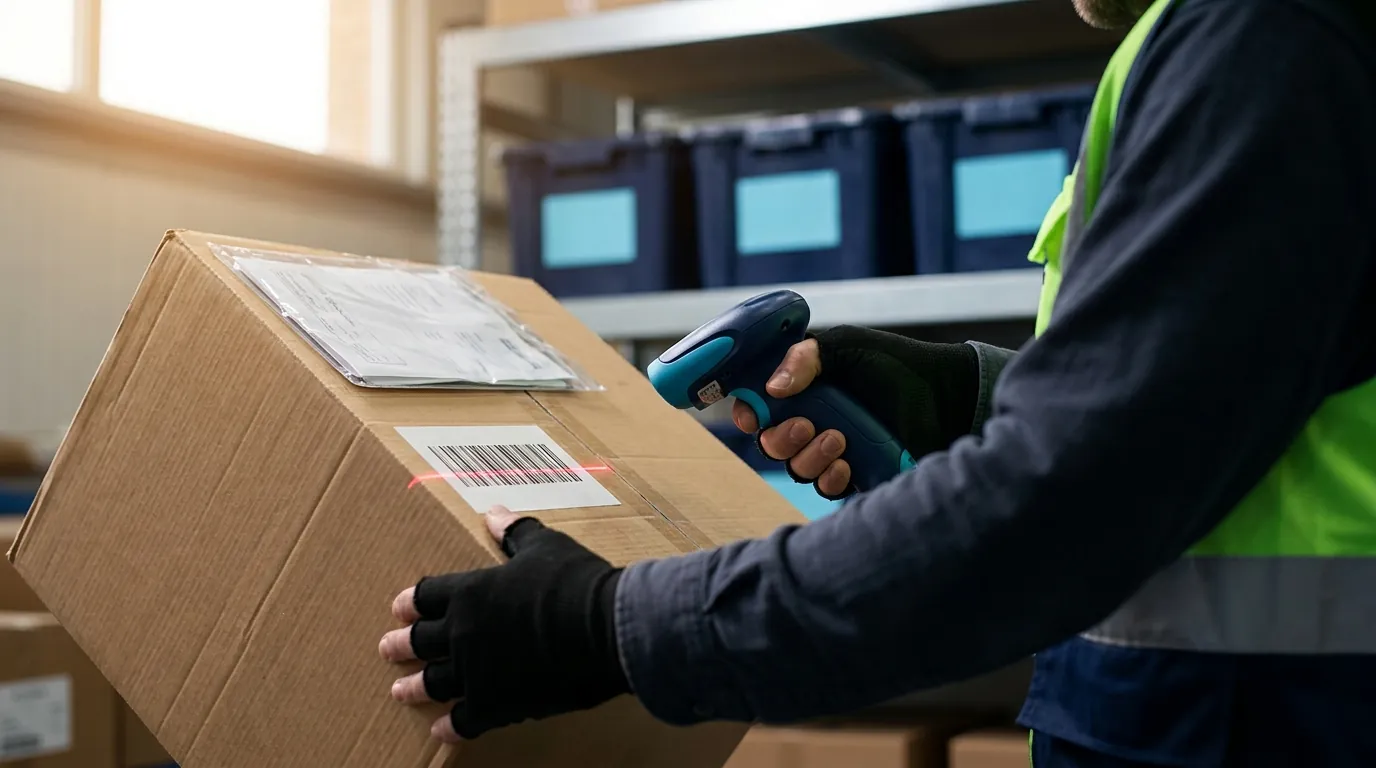
Air Waybill Number Explained: Structure, Check Digit and a Worked Example
Every AWB number is 11 digits long: a 3-digit IATA airline prefix, a 7-digit serial number and one check digit calculated with modulus 7.
You will usually see it printed as XXX-XXXXXXXX, with a hyphen after the prefix. Airlines allocate serials in blocks, both for their own use and for their agents. The check digit lets a person or a system confirm the number is internally consistent before it is booked, keyed or tracked. Reading and validating one takes about a minute, and it is the cheapest defence against a typo that ends in missing freight.
Anatomy of an 11-Digit Air Waybill Number
The sample below, 000-12345675, is fictitious and used purely for illustration.
- Airline prefix (digits 1 to 3): 000 in the sample. This is the IATA code for the issuing carrier.
- Serial number (digits 4 to 10): 1234567 in the sample. This is the shipment serial allocated by the airline.
- Check digit (digit 11): 5 in the sample. This is the remainder when the serial is divided by 7.
Worked Example: Calculating the Mod-7 Check Digit
Divide the seven-digit serial by 7. The remainder should match the final digit.
- Take the serial: 1,234,567.
- Divide by 7: the whole-number result is 176,366.
- Multiply back: 176,366 × 7 = 1,234,562.
- Subtract: 1,234,567 minus 1,234,562 leaves 5.
- Compare: the last digit is 5, so the number passes.
Now suppose someone keys the serial as 1243567, swapping two digits. Dividing that figure by 7 leaves a remainder of 3, which does not match the printed 5, so the mistake surfaces straight away. Mod 7 has limits, though. It misses some errors, such as swapping digits that differ by exactly 7 (0 and 7, 1 and 8, 2 and 9). Treat it as a filter that reduces mistakes, not a guarantee. Good freight and logistics software runs this check automatically whenever a number is entered.
Identifying the Airline and Telling MAWB From HAWB Numbers
The prefix identifies the carrier, and you can look up any three-digit code in the IATA airline and location code search.
This format applies only to master numbers (MAWBs). House numbers (HAWBs) are issued by the forwarder, so their length and structure vary. Many mix letters and digits, and none carry a carrier prefix or a mod-7 check digit. If a reference begins with letters or runs to something other than 11 digits, you are probably holding a HAWB, and tracking should go through the forwarder rather than the airline.
How to Find and Track a Shipment Using an Air Waybill Number
Find the number in the top corners and bottom right of the AWB form, or on the barcoded cargo labels. Then enter it into the airline's or forwarder's tracking portal.
Tracking this way gives you milestone updates from acceptance at origin through to delivery. You need to know which reference to use and what each status means for your receiving team, because a status that looks like good news (such as an arrival) does not always mean the freight can be collected yet.
Step-by-Step Tracking
- Locate the number. On the form it appears at the top left, top right and bottom right. On each package, look for the airline cargo label, which shows it in large print and as a barcode.
- Decide MAWB or HAWB. If you booked directly with an airline, use the master number. If a forwarder consolidated the freight, start with your house number.
- Identify the carrier. Match the three-digit prefix to the airline using the IATA airline and location code search.
- Open the correct portal. A MAWB belongs on the airline's cargo site, and a HAWB goes on the forwarder's. Some multi-carrier tracking services accept both.
- Enter the digits without spaces or hyphens, unless the portal asks for the prefix in a separate field.
- Record milestones against the inbound order so the warehouse can plan dock time and labour. Sea freight needs the same discipline, as covered in our article on container tracking and demurrage.
What Common Tracking Statuses Mean
Many airlines report progress with standard industry status codes:
- BKD: booked on a flight.
- RCS: received from shipper; the carrier has accepted the cargo.
- MAN: manifested on a specific flight.
- DEP: departed on the specified flight.
- ARR: arrived at the airport.
- RCF: received from flight into the destination terminal.
- NFD: consignee or agent notified that the freight is ready.
- DLV: delivered to the consignee or agent.
- DIS: a discrepancy has been recorded, such as missing pieces or damage.
For receiving teams, NFD is the real trigger. It is the moment to book collection, confirm a dock door and line up staff to unload. A DIS status deserves equal attention, since it often means the delivery will arrive short or need inspection. When these events are captured in a warehouse management system, the inbound schedule can follow what the carrier reports rather than what someone remembers from an email.
When the Number Is Not Found
A "number not found" result usually points to a typo, the wrong portal or data that has not been transmitted yet. First, divide the serial by 7 again to confirm the number is valid. Next, check whether you hold a master or house reference and that you are on the matching site. Newly issued numbers may not appear until the cargo is accepted at origin, so allow a few hours. If it still fails, ask the shipper or forwarder to verify the reference and booking details.
It also helps to keep a short log of failed lookups. A pattern, such as one supplier's references regularly failing, usually points to a process gap at the sending end rather than bad luck, and fixing it once saves repeated chasing.

Reading an Air Waybill Form: Key Fields, Copies and the e-AWB
Every airline prints the AWB to an IATA standard layout, so once you learn where each box sits, you can read a document from any carrier in a minute or two.
Each field feeds a later step in the shipment. Consignee details control who can collect the cargo, weight sets the charges, and the goods description supports customs clearance. The lists below set out the main boxes and the paper copies.
Key Fields on the Air Waybill
- Shipper: sender's name, address and contact. It identifies the contracting party.
- Consignee: receiver's name, address and contact. Cargo is released only to this party.
- Issuing carrier's agent: agent name, IATA code and city, showing who issued the document.
- Routing: departure airport, destination and the carrier for each leg, which together define the journey.
- Handling information: special instructions, marks and dangerous goods notes that tell ground staff how to treat the freight.
- Pieces and weight: piece count, gross and chargeable weight, and dimensions. These must match what is physically tendered.
- Rates and charges: rate class, charges and whether they are prepaid or collect, which settles who pays what.
- Declared value: value for carriage and for customs, affecting carrier liability and duties.
- Nature and quantity of goods: a description of the contents, used in customs and security screening.
For warehouse teams, the piece count and weight boxes deserve the closest check. If the carton count or gross weight on the form differs from the pallet at the dock, acceptance can stall until someone corrects the paperwork.
Colour-Coded Originals and Who Receives Them
A paper set contains three colour-coded originals and several copies.
- Original 1 (green): kept by the issuing carrier.
- Original 2 (pink): for the consignee; it travels with the goods.
- Original 3 (blue): handed to the shipper.
- Copy 4 (yellow): the delivery receipt, signed by the consignee.
- Remaining copies (white): destination airport, participating carriers, the agent and spares.
The blue original is the shipper's evidence that the carrier accepted the goods, so file it alongside the commercial invoice.
The Electronic Air Waybill (e-AWB)
An e-AWB swaps the paper form for an electronic data message with the same legal standing.
IATA Resolution 672, known as the Multilateral e-AWB Agreement, makes this possible. Airlines and forwarders sign one agreement instead of negotiating separate contracts with every partner. Since 2019 the electronic version has been the default carriage contract on enabled trade lanes. Practical gains include fewer keying errors, quicker acceptance at the terminal and no lost originals. Some routes and cargo types still call for paper, so confirm the requirement with your carrier before shipping on a new lane.
One point is easy to overlook. With an e-AWB, the data your team transmits effectively becomes the contract, so a wrong weight or carton total cannot simply be crossed out at the cargo counter. Compare the electronic record with the freight itself before it is sent.
Air Waybills in Warehouse Operations: Receiving, Dispatch and Avoiding Costly Errors
Inside the warehouse, the AWB number is the reference that ties physical freight to orders, inventory and customs records. The rule is simple: capture it once, accurately, and reuse it everywhere it is needed.
Most errors appear when staff re-key AWB details by hand. A warehouse management system (WMS) that records the number by scan and attaches it to the relevant order gives receiving and dispatch teams one dependable reference for every air shipment.
Capturing AWB Data at Receiving and Dispatch
Scan the barcoded label instead of typing digits. On inbound freight, scanning each piece confirms the AWB and checks the piece count against it as the pallet comes off the truck. Short or over-delivered cartons can then be flagged while the driver is still on site.
Where a label is damaged or missing, key the number once and validate it before saving, rather than writing it on a clipboard for someone to enter later. Every extra transcription is another chance for two digits to swap places.
For outbound consignments, record the number the airline or forwarder provides against the shipment. Confirm that weights and carton counts agree with what will be declared, and apply labels consistently. Validating the final digit with modulus 7 at the point of entry stops an invalid number before it reaches your forwarder. Printing the reference on internal packing documents also helps, because packers can match every outbound carton to its consignment without hunting for paperwork.
Linking HAWBs to MAWBs and Matching Orders
With consolidated freight, store each house waybill (HAWB) as a child record of its master (MAWB), so any carton can be traced back to both. When the consolidation lands, receivers see which HAWBs belong to which purchase orders and put stock away against the correct supplier.
Consider a distributor receiving 40 cartons under one MAWB and four HAWBs. If each carton is scanned and the record shows which HAWB it belongs to, a missing carton appears against one supplier's order immediately, instead of surfacing days later as an unexplained stock variance.
Matching AWBs to purchase or sales orders also makes discrepancy handling, landed-cost reconciliation and customer enquiries far quicker. Exchanging AWB, weight and piece data electronically with forwarders removes duplicate keying on both sides. A WMS can capture these references on arrival and keep them attached to orders and stock.
Checklist: Common AWB Mistakes That Cause Holds
Run through these points before tendering outbound freight and again when checking inbound paperwork:
- Mismatched weights: the declared figure differs from the scale reading at acceptance or arrival.
- Incorrect consignee details: a wrong name or address, or no contact, delays release.
- Vague goods descriptions: terms such as "parts" or "samples" give customs nothing to classify.
- Transposed numbers: digits keyed out of order; validation catches most of these.
- Piece count discrepancies: labels, AWB and packing list disagree.
- Missing handling information: undeclared dangerous goods or unstated temperature requirements.
- Unlinked HAWBs: house shipments not tied to the correct MAWB, leaving cargo unclaimed.
To discuss how your own receiving and dispatch processes handle air freight references, Contact Us.
Frequently Asked Questions
What is an air waybill?
An air waybill (AWB) is the transport document issued for cargo carried by an airline. It acts as the contract of carriage between shipper and carrier, a receipt confirming the airline accepted the freight, and the shipment record used by customs and ground handlers. IATA standardises the form, so it looks broadly similar across airlines and routes.
Is an air waybill a document of title?
No. An air waybill is non-negotiable and does not confer ownership of the goods, unlike an ocean bill of lading issued as an order bill. The airline releases cargo to the consignee listed on the document rather than to whoever holds the paper, which is why consignee names, addresses and contact details must be exactly right.
How many digits is an air waybill number and what is the check digit?
An air waybill number has 11 digits: a 3-digit IATA airline prefix, a 7-digit serial and a final check digit. The check digit is the remainder when the serial is divided by 7. For example, the serial 1234567 leaves a remainder of 5, so a valid number using that serial would end in 5.
What is the difference between a MAWB and a HAWB?
A master air waybill (MAWB) is issued by the airline or its agent to the freight forwarder, while a house air waybill (HAWB) is issued by the forwarder to each individual shipper. When cargo is consolidated, the airline sees one MAWB for the whole booking and each customer receives a HAWB for their own goods. HAWB formats vary and carry no airline prefix.
How do I track a shipment with an air waybill number?
Enter the 11-digit number, without spaces or hyphens, into the cargo tracking portal of the airline that matches the three-digit prefix. If a forwarder consolidated your freight, use your house number on the forwarder's site instead. A not found result usually means a typo, the wrong portal, or data that has not yet been transmitted before acceptance at origin.
What does NFD mean in air cargo tracking?
NFD means the consignee or their agent has been notified that the freight is ready for collection at the destination terminal. For receiving teams it is the practical trigger to book collection, confirm a dock door and line up staff to unload. It typically follows RCF, the status showing cargo has been received from the flight.