
Container & Rail Management
Container management software built around how Australian and New Zealand freight actually moves.
Container tracking, rail scheduling, and road consignment documentation in one system — integrated directly with ContainerChain, so status updates move automatically instead of being re-typed by hand.
The problem
Container, rail, and road documentation shouldn't need three different tools
Container status lives in one tool, rail scheduling in another, and road consignment documentation in a third — so nothing lines up, and someone on your team ends up re-keying the same reference numbers by hand.
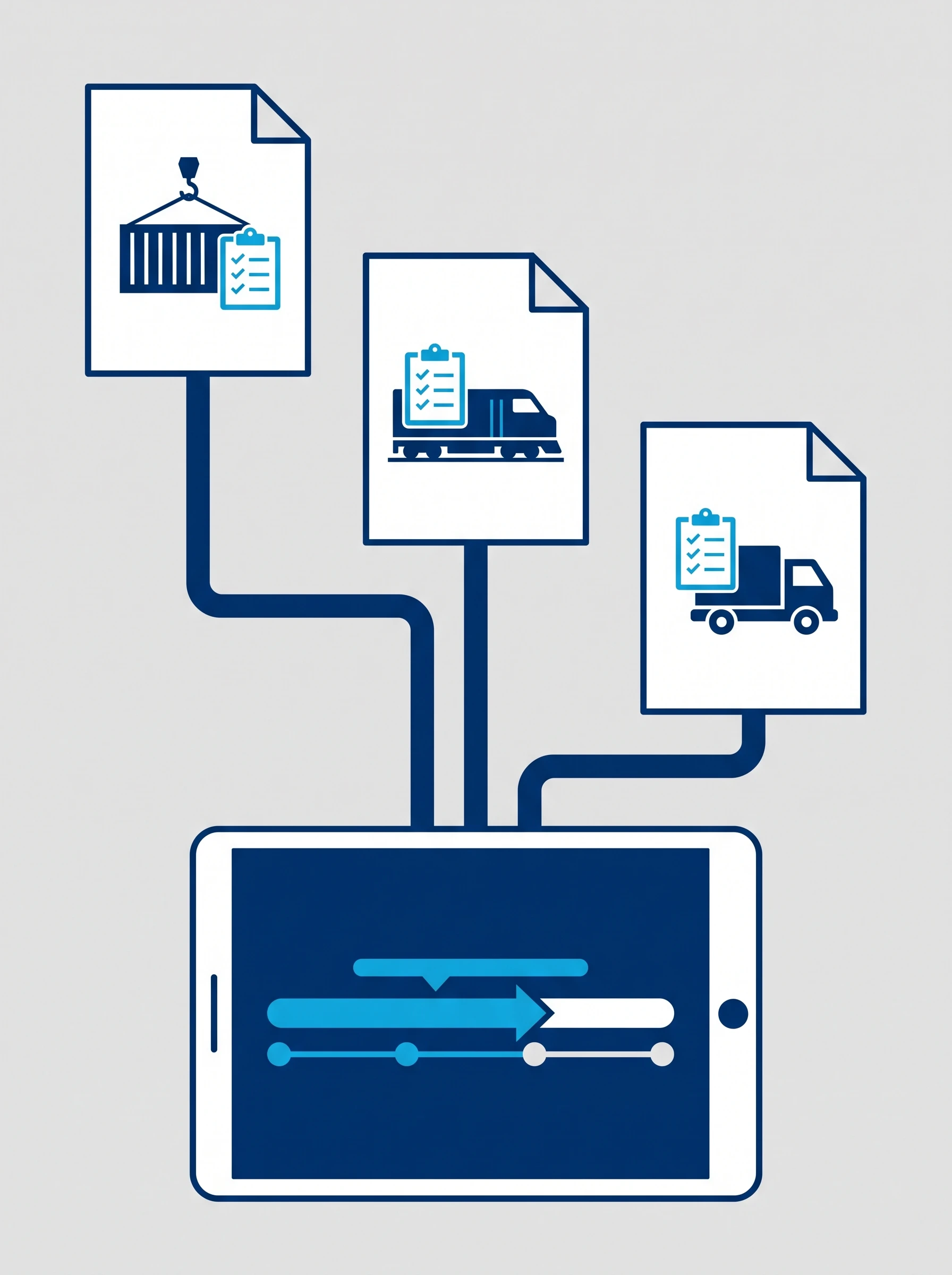
Expedient runs container tracking, rail scheduling, and road consignment documentation in the one system — integrated directly with ContainerChain, so status moves between you and your transport providers without manual re-entry.
ContainerChain Integration
Integrates directly with ContainerChain, the data-exchange platform most Australian transport providers already use for empty-container logistics — so container status moves between systems automatically, with no manual re-entry required at your end.
Container Tracking
Track containers from booking through to return, all in one place — no switching between spreadsheets or separate tracking tools to see where a container actually stands at any point in its journey.
Rail Scheduling
Coordinate rail movements alongside your container and road freight, in the same system that already handles the rest of the job — rather than juggling a separate rail-only tool and re-keying the same data twice.
Road Consignment Documentation
Generate and manage road consignment documentation — accrual, departure, export, and screen records — from the same system tracking the container itself, so the paperwork and the freight never fall out of step.
End-to-End Visibility
See container, rail, and road-consignment status side by side instead of chasing updates across separate tools — one view of where every shipment actually stands, updated as the work happens, not after the fact.
Fewer Manual Re-Entries
Because container, rail, and transport-provider data flow through one connected system, your team spends less time re-typing the same reference numbers and status updates into two or three different places by hand.
Frequently Asked Questions
Does Expedient integrate with ContainerChain?
Yes. Expedient connects directly with ContainerChain, the data-exchange platform most Australian transport providers already use for empty-container logistics. Container status and movement data pass between the two systems automatically, so your team isn't re-typing the same details into a separate portal every time a container moves. It's a direct integration we've built and support ourselves, not a bolt-on maintained by a third party.
Can Expedient handle rail movements as well as container tracking?
Yes. Rail scheduling sits alongside container and road-freight tracking in the same system, rather than in a separate rail-only tool you have to maintain on the side. That means a container's rail leg is visible next to its ocean or road legs, without switching screens or re-entering the same booking and status details in a second application just to keep the rail side up to date.
What does "road consignment documentation" actually cover?
It covers the paperwork tied to road freight movements — accrual, departure, export, and the screen records staff use to manage them day to day. Rather than keeping those documents in a separate system from the container or shipment they belong to, Expedient generates and stores them alongside the rest of the job, so the documentation and the freight itself always stay in step with each other.
See container and rail management in one system
Talk to us about moving container, rail, and road documentation into one connected platform.