For container transport companies moving freight in and out of Australian and New Zealand ports, the container itself doesn't stop being a cost centre once it clears customs and leaves the wharf. It keeps generating cost - and risk - for every day it sits somewhere it shouldn't, whether that's a port stack, a rail yard, or a customer's premises with an unreturned empty. Demurrage and detention charges are some of the more avoidable costs in freight forwarding, and they almost never come from a single bad decision. They come from losing track of a free-time clock across a chain of handoffs - vessel to wharf, wharf to rail, rail to road - until an invoice turns up weeks later with a number nobody signed off on.
This guide walks through what container management actually needs to cover to keep that from happening: tracking containers through each leg of their journey, keeping the rail leg inside the same visibility as the ocean leg, and using integrated status data instead of a patchwork of carrier portals and phone calls to catch demurrage exposure before it becomes a charge.
What Container Management Actually Covers
"Container management" sounds like it should just mean booking freight and issuing a bill of lading, but the practical job is broader than that. A container generates events from the moment it's nominated for a booking through to the moment the empty is returned and off-hired, and each of those events matters for cost control:
- Vessel ETA and discharge at the port of arrival
- Gate-in and gate-out at the terminal
- Any rail movement to or from an inland depot
- Delivery to the consignee and devanning
- Empty container return and off-hire confirmation
Each step carries its own free-time allowance, set by the shipping line or terminal, and each one is a point where a container transport company either has current visibility or doesn't. The forwarders who manage this well aren't necessarily moving fewer containers - they're tracking the full sequence in one place, rather than reconstructing it after the fact from a mix of carrier notifications and manual follow-up calls.
Historically, a lot of that tracking has lived across separate systems - a carrier's own portal for vessel and gate events, a spreadsheet for rail bookings, a phone call to the rail operator or trucking subcontractor for anything that doesn't show up electronically. Each handoff between systems is also a handoff of responsibility for noticing when something's about to become a cost, and that's exactly the kind of gap a demurrage charge tends to find.
Demurrage: Where the Money Actually Leaks
Demurrage is the charge a shipping line or terminal applies for keeping a container within the port or rail yard beyond its agreed free time - the number of days it's allowed to sit before pickup without penalty. Detention is the related but distinct charge for keeping the container itself once it's left the terminal, beyond its free days, before the empty comes back. Both exist for the same commercial reason: terminals and shipping lines want their infrastructure and equipment moving, not parked.
From a forwarder's side, both charges tend to come from the same root cause: nobody noticed the clock was running until it had already run out. That can happen for entirely mundane reasons - a documentation delay holds up release, a customer's yard is backed up and can't take delivery, a rail slot falls through and the container sits an extra two days at the yard waiting for the next one. None of those are dramatic failures. They're small visibility gaps that compound, one missed status update at a time, across however many containers a forwarder is moving in a given week.
That's the real cost of managing container status manually or across disconnected systems: it's not that the data doesn't exist, it's that nobody's looking at all of it, for every container, early enough to act.
There's also a second-order cost that's easy to miss: even when demurrage is charged correctly, checking that a charge is accurate against a container's actual free-time history takes real time - matching gate-in and gate-out dates, confirming which free-time allowance applied, and querying anything that doesn't line up. Forwarders without a clear tracking record end up disputing invoices from memory and email trails instead of from a system record, which is a slow way to fight a charge that was avoidable in the first place.
The Rail Leg: A Second Free-Time Clock Most Systems Miss
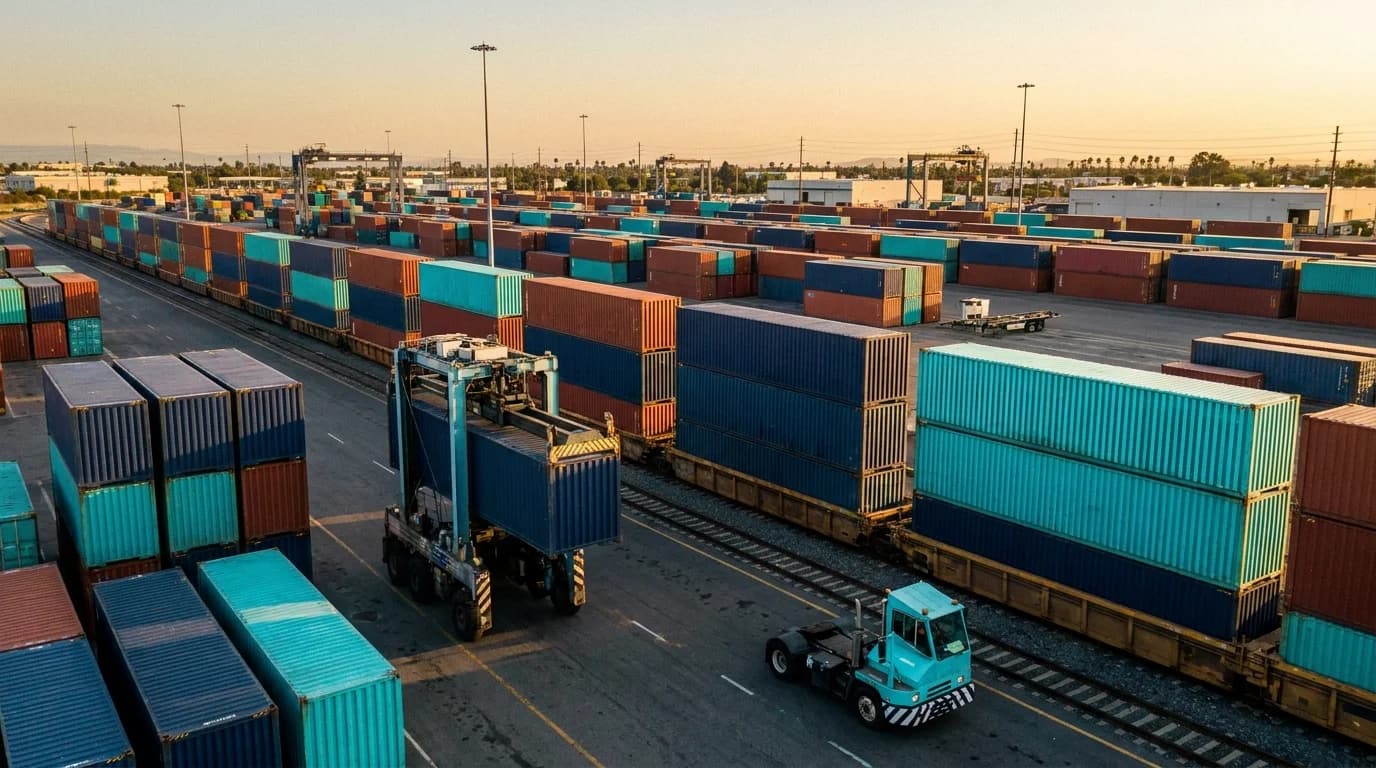
For container transport companies running multimodal freight - an ocean leg into an Australian or New Zealand port, then rail to an inland container terminal - the rail leg introduces a second free-time clock, and it's the one that most commonly falls out of view.
The ocean leg tends to get watched closely, because it's the leg carriers actively communicate about: ETAs, discharge confirmations, gate-in notices. But once a container is transferred to rail for an inland move, it's easy for it to effectively disappear from a forwarder's active tracking until it resurfaces at the destination depot - at which point the rail yard's own free-time allowance may already be most of the way spent.
This is where keeping rail movements inside the same system as ocean and container tracking matters in a very concrete way. It's not a matter of tidiness, it's the difference between seeing a rail-yard deadline approaching in time to act on it, versus finding out about it when the additional yard fee turns up on an invoice. A platform that manages the rail leg as a continuation of the same container record - rather than handing it off to a separate spreadsheet or a phone call to the rail operator - keeps that second clock in view the whole time, not just at the endpoints.
ContainerChain and Why Integrated Status Data Matters
Closing the visibility gap depends on getting status data automatically, rather than chasing it. ContainerChain is a widely used container status and slot-booking data source across Australian and New Zealand ports and terminals, and integrating it directly into a container management system changes the tracking workload from active to passive: gate-in, gate-out, and availability updates flow into the same record a forwarder already works from, instead of requiring someone to log into a separate terminal portal - or several - to check status container by container.
For a forwarder handling more than a handful of containers a week, that difference compounds fast. Checking a few portals manually for a few containers is tedious but manageable. Doing it at real volume, across multiple terminals and rail yards, with a specific free-time deadline attached to each one, is where things get missed - not because anyone's careless, but because the process wasn't built to surface deadlines proactively in the first place.
Expedient's container management and container rail modules are built around this: container and rail tracking data, including ContainerChain integration, sits inside the same system used for the rest of a forwarder's booking and customs workflow, rather than as a separate tool a team has to remember to check.
The Road Leg Still Needs Its Own Paperwork
Once a container's contents are devanned and moved onward by road, that leg picks up its own documentation requirement - generally a road consignment note recording the goods, parties, and terms of the road movement. It's a smaller piece of the overall demurrage picture than the sea and rail legs, since the container itself has typically already cleared its free time by this point, but it's still a place where a missing or delayed document can hold up final delivery to the customer, even after the harder part of the container's journey is done.
Keeping road-leg documentation inside the same platform as the rest of the shipment record - alongside sea freight bookings and the customs steps that precede them - closes out the last part of the visibility chain, from vessel to consignee, in one place.
Practical Steps to Reduce Demurrage Exposure
For container transport companies wanting to get ahead of this rather than reconciling it after the fact, five steps cover the practical ground:
- Map free-time windows by port, rail yard, and carrier - free time isn't uniform, and assuming a blanket number across every terminal and shipping line is exactly the kind of assumption that produces an unexpected charge.
- Centralise status tracking rather than checking multiple carrier and terminal portals separately - the more places status data lives, the more likely one of them gets missed on a busy day.
- Surface approaching deadlines proactively, not reactively - the goal is catching a free-time window before it closes, not explaining the charge after it's already landed on an invoice.
- Keep the rail and road legs inside the same tracking record as the ocean leg, so a handoff between transport modes doesn't also become a handoff into a visibility gap.
- Reconcile demurrage and detention invoices against your own tracking record, not the carrier's version alone - a system record of gate and free-time events is what actually settles a disputed charge.
Next Steps
Demurrage is one of the more controllable costs in freight forwarding, but only if it's actually visible before it becomes a charge. For container transport companies managing multimodal freight across sea, rail, and road, that means tracking every leg of a container's journey in one place, rather than reconstructing it after the fact. Contact us to talk through what integrated container and rail tracking looks like for your lanes.
Frequently Asked Questions
What's the difference between demurrage and detention?
Demurrage is the charge for keeping a container at the port or rail yard beyond its agreed free time before pickup. Detention is the charge for keeping the container itself, once it's out of the terminal, beyond its free days before the empty is returned. Both come from the same underlying problem: losing track of a free-time clock until the invoice arrives.
How does better container tracking actually reduce demurrage costs?
Demurrage rarely comes from one bad decision - it comes from nobody noticing a free-time deadline until after it's passed. Centralised, near-real-time tracking surfaces approaching deadlines while there's still time to act on them, rather than at invoice reconciliation once the charge is already locked in.
What is ContainerChain and why does the integration matter?
ContainerChain is a container status and tracking data source used across Australian and New Zealand ports and terminals. Integrating it into a container management system means status updates - gate-in, gate-out, availability - flow automatically into the same record forwarders already use, instead of requiring separate manual checks across multiple carrier and terminal portals.
Does container management software cover the rail leg, or just the ocean leg?
It should cover both. Once a container moves off the wharf onto rail for an inland leg, it picks up a second free-time clock at the rail yard - and if that leg is tracked in a different system, or not tracked at all, it's an easy place for demurrage exposure to build up unnoticed. Managing rail movements in the same system as the ocean leg keeps one visible history instead of two disconnected ones.
What about the road leg once the container's been devanned?
Road transport picks up its own documentation requirement, generally handled through a road consignment note. It's a smaller piece of the visibility problem than the sea and rail legs, but it's still a place where a missing or delayed document can hold up delivery to the end customer, even after the container itself has cleared its free time.